
The Unsung Hero of Green Technology: How Fibreglass Is Powering Data Centre Sustainability
Introduction
As the digital world expands, data centres have become the backbone of modern life—powering everything from cloud computing to AI and streaming platforms. Yet, these facilities are among the world’s most energy-intensive infrastructures, consuming vast amounts of electricity and water for cooling and operations. The industry’s focus has now shifted toward sustainability—building greener, more energy-efficient data centres without compromising reliability or performance.
One of the most promising materials driving this transformation is fibreglass. Known for its durability, light weight, and corrosion resistance, fiberglass is proving to be a key contributor to sustainable data centre construction and operation. Fibreglass Solutions Inc. (FSI), a Canadian leader in GRE (Glass-Reinforced Epoxy) piping and structural systems and an authorized distributor for NOV FiberGlass Systems, is at the forefront of helping data centres integrate this sustainable material into critical infrastructure.
1. The Sustainability Challenge in Data Centres
Data centres consume approximately 1–2% of global electricity, and that number continues to rise. Cooling systems alone can account for nearly 40% of total energy usage. Traditional infrastructure materials like steel or copper-nickel can corrode, degrade, or require frequent maintenance—leading to inefficiencies, higher energy costs, and premature replacement.
To achieve long-term sustainability, owners and operators are looking for materials that are strong, efficient, and low-maintenance, while also reducing their overall carbon footprint. This is where fibreglass provides a clear advantage.
2. Fibreglass: Engineered for Efficiency and Longevity
Fibreglass, particularly in the form of GRE piping and structures, offers a combination of performance and sustainability that traditional materials cannot match.
Key sustainability and performance benefits include:
- Corrosion Resistance: GRE systems are unaffected by rust, scaling, or chemical corrosion, eliminating the need for protective coatings or frequent replacement.
- Lightweight Construction: Being significantly lighter than metal, fibreglass reduces transportation emissions and eases installation, cutting project timelines and energy usage.
- Thermal Efficiency: With low thermal conductivity, glass-reinforced epoxy materials naturally reduce heat transfer—critical for maintaining stable cooling in data centres.
- Extended Lifespan: Fibreglass systems will last for 50+ years with minimal maintenance, reducing lifecycle costs and waste.
By combining these features, fibreglass helps data centres operate more efficiently, minimize environmental impact, and achieve sustainability certifications like LEED or ISO 14001.
3. GRE Piping: The Backbone of Sustainable Cooling Systems
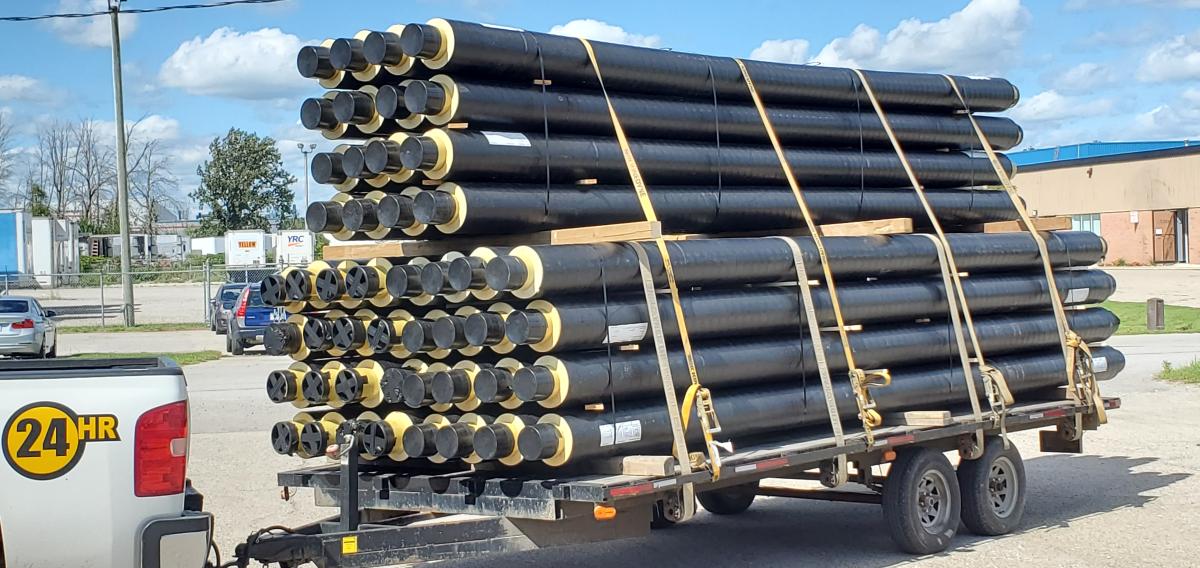
In data centres, the cooling network is the heartbeat of the facility. Reliable, leak-free, and energy-efficient piping is essential to maintaining optimal temperatures. FSI’s GRE piping solutions, manufactured by NOV Fiber Glass Systems, are purpose-built for such high-performance applications.
Advantages of GRE piping in data centre environments:
- Zero Corrosion: Ideal for chilled-water and chemical lines that run continuously in humid or corrosive environments.
- Smooth Internal Surface: Prevents scale build-up and pressure loss, maintaining consistent flow rates and reducing pump energy consumption.
- Ease of Installation: Lightweight segments and flexible jointing systems enable faster on-site assembly, reducing downtime.
- Sustainability Through Durability: Longer system life means fewer replacements and lower embodied carbon over time.
These benefits directly translate into reduced operational energy costs, fewer maintenance interventions, and enhanced reliability—all key performance indicators for sustainable data centre design.
4. Structural Fibreglass in Data Centre Design
Beyond piping, fibreglass structural systems are increasingly being used in platforms, cable trays, ladders, and support frameworks. Unlike metal alternatives, fibreglass structures do not conduct electricity and resist corrosion—making them ideal for electrically sensitive, high-humidity environments where exposure to exterior elements is of concern.
The lightweight nature mentioned above allows for modular and elevated construction designs, contributing to better airflow and space optimization within facilities. This modularity also simplifies expansion, enabling scalable growth with minimal environmental disruption.
5. FSI’s Role in Enabling Sustainable Infrastructure
Fibreglass Solutions Inc. provides engineered GRE and composite solutions that meet the rigorous performance standards of modern data centres. As an authorized Canadian distributor for NOV FiberGlass Systems, FSI combines global innovation with local expertise, ensuring high-quality products backed by engineering support and lifecycle services.
FSI works closely with contractors, facility designers, and engineers to integrate fibreglass systems that align with sustainability goals—helping reduce environmental footprints while enhancing operational reliability. From initial design and hydraulic modelling to fabrication and installation support, FSI ensures every solution is built to last.
6. A Step Toward Greener Digital Infrastructure
The world’s digital growth is unstoppable—but its environmental impact doesn’t have to be. As data centres strive to achieve net-zero emissions, fibreglass is emerging as a key enabler of sustainable design. Its combination of durability, efficiency, and long-term performance makes it the preferred material for operators who value both resilience and responsibility.
By embracing fibreglass infrastructure, companies can:
- Lower their carbon footprint.
- Reduce maintenance and operational costs.
- Extend asset lifespan and reliability.
- Support broader environmental goals without sacrificing performance.
Conclusion
Fibreglass is quietly transforming the data centre industry from the inside out—making sustainability achievable without compromising strength or efficiency. Through its partnership with NOV FiberGlass Systems, Fibreglass Solutions Inc. continues to champion this transformation, delivering GRE piping and structural solutions that help build the next generation of green, energy-efficient data centres.
As the digital economy expands, materials like fibreglass will play an essential role in creating infrastructure that not only supports connectivity but also protects our planet.